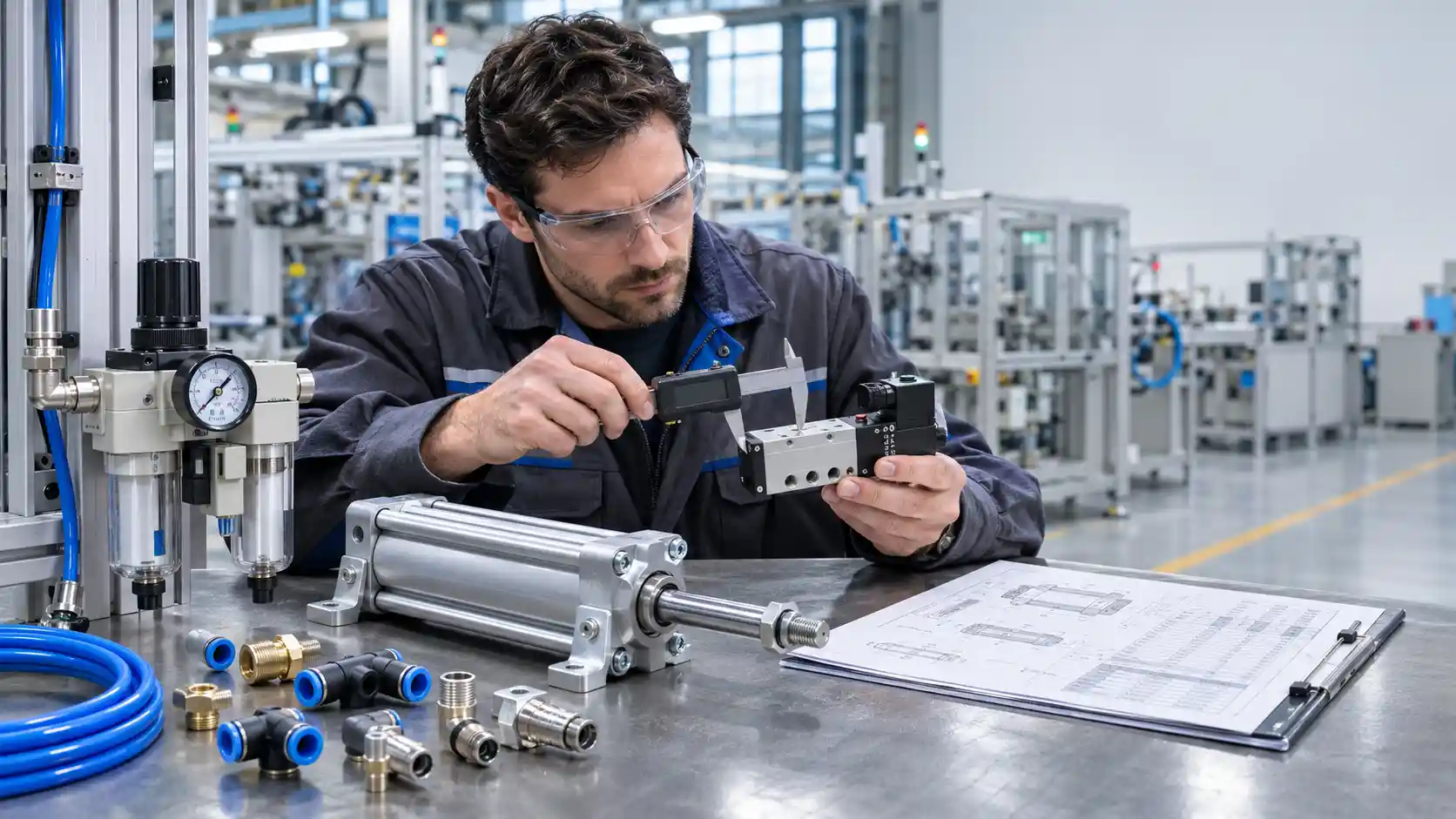
Two valves on the shelf can be exactly the same. One is easy to install, it's the one that is purchased in minutes. The other you are adding to the ever-growing product database, blaming in a long email thread. Maintenance teams and purchasing managers experience this first hand when buying from pneumatic suppliers. Cylinders, valves, and fittings may all have the same body shape, but a different bore size, coil voltage, port thread or pressure rating.
This guide explains what to check when ordering from pneumatic products suppliers, so your next order is the right one.
The wrong part almost never fails on day one. It causes costly, slow failures. Knowledgeable choices in pneumatic component selection are the key to reliable equipment, a reliable production schedule and a reliable maintenance budget. Our experienced industrial pneumatic suppliers can help you avoid these pitfalls:
These seven checks can be used as a pneumatic buying checklist to confirm each and every order. They can be used by buyers across the pneumatic suppliers in India and will only take a few minutes per part.
Begin with the machine, not the catalog. Here are some essentials to keep in mind before reaching out to anyone:
As well as make your next steps simple, having straightforward needs for industrial pneumatics components can assist you communicate your pneumatic system requirements to your distributor.
Any component must be rated to withstand the conditions it will encounter. Looks are meaningless in this regard.
Verify the specs with the datasheet to make sure you can achieve this pneumatic pressure rating. If so, then examine the pneumatic airflow requirements of your circuit as well, as the underfed cylinder has a jerky motion.
The same cylinders can look alike but it's the small dimensions that will determine if they will fit.
Provide these details to pneumatic cylinder suppliers and your loads. Always compare pneumatic cylinder specifications to the old part or your drawing.
Both the air and electrical information in solenoids valves need to be tested.
These are the first things that experienced solenoid valve suppliers will want. Thoughtful pneumatic solenoid valve selection will keep the coil safe and the valve shifting.
Cheap though not entirely suitable tubing and fittings can bring an entire line to a halt.
Trustworthy PU tube suppliers can verify the size fast. The best pneumatic push fittings will offer the best sealing qualities if the tube has been cut square. Verify each and every one of your pneumatic connections prior to fitting.
A datasheet is the photo's answer sheet.
All you need to do to clear doubts is read pneumatic product datasheets. The easiest test of pneumatic component compatibility before you buy.
A correct part is only good if you can get it on time – and again next year.
Local pneumatic suppliers in Noida greatly reduce lead time for regional plants. Reliable pneumatic spare parts suppliers ensure your maintenance runs smoothly when a part fails.
Here's an example. A line of packaging requires a valve to replace a sticking cylinder. The buyer orders what appears to be the same valve. A technician now checks four details to be sure before purchase:
Verifying pneumatic component compatibility first saved a return trip. The same caution is needed with any solenoid valve replacement.
Have this quick list in front of you when you order. It makes all of the above checks just a quick-and-easy routine.
Another benefit of following a pneumatic components buying checklist is you will find it easier to compare quotes from different industrial pneumatic suppliers.
Most wrong orders are the result of a few repeat offenders. Take a peek at the common offenders:
Every single error results in pneumatic buying mistakes that are worth significantly more than the part saved. They generate unnecessary demand for pneumatic replacement parts that should've been perfect from the start.
Shoppers require an associate who checks specifications just as thoroughly as they do. VS Pneumatic offers a working range of of industrial machinery:
Tell us your part numbers, pressure and voltage specifications and the team at VS Pneumatic will help you to match the right part. This fits all pneumatic suppliers in Noida, for people who want a logical reason for choice and not just price. It also fits those seeking pneumatic products suppliers on technical support.
Choosing the correct component is the result of three habits; check the specs, confirm compatibility and compare what the supplier can actually deliver. A few minutes of research on datasheets and part numbers on your next order can be the key to saving days of downtime. Follow this checklist next time and select pneumatic suppliers that double check every detail.
|
Share your machine requirements with VS Pneumatic and get the right component the first time. Reach out today for a clear, specification-based enquiry. |
Look at their components portfolio, technical support and receptiveness to confirming specifications. Inquire about their stock levels, lead times and after-sales support. A reliable pneumatic supplier will respond to technical queries in writing and in a clear way.
Occasionally, but only when you go from the same mech, electro and performance spec. Compare bore, ports, volt & flow before switching brands. Good pneumatics compatibility checks eliminate fit issues and premature failures.
Datasheets compile operating ratings, size and pin out information at-a-glance. They enable you to double-check a component before you buy it. Pneumatic component datasheets help eliminate trial-and-error when choosing a replacement.
Match the port config, port size, coil voltage and normal state and compare with your old valve. Check flow against the requirements of the cylinder. Your supplier can help if you give them these details from the nameplate.
Yes. Tube OD must be exactly the same size as the fitting, or else it will leak or pull out. Also verify the thread size. Confirm both on your spec sheet before ordering in bulk.
Order in bulk only after you have tested a sample part on your machine so that you have the assurance of fit and function. Agree, in writing, quantities and delivery dates with your supplier.