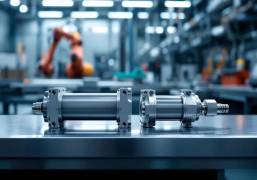
A practical guide to polyurethane tubing for pneumatic and industrial systems
Ask anyone on a busy shop floor what breaks first on a pneumatic line, and tubing usually comes up. Constant bending, vibration, sharp turns near valves — ordinary tubing gives out faster than expected. PU tubes hold up where other materials don't. Built from polyurethane, this tubing has quietly become the default across factories and automated lines. A polyurethane tube takes a tight corner without any fuss, and it still holds pressure like it should. So what are PU tubes, really? We'll get into the main types too, plus the specs worth checking and a few places you'll actually spot this tubing on a factory floor.
What Are PU Tubes?
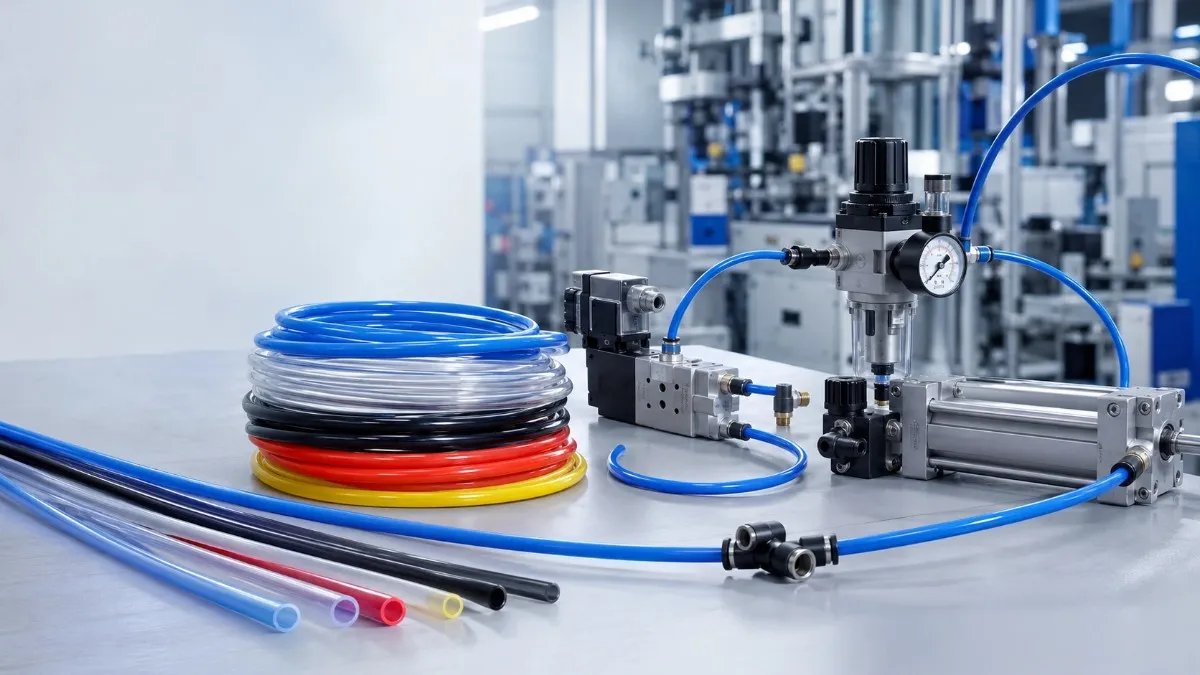
Strip it down and a PU tube is just flexible hollow tubing made from polyurethane. What makes it worth talking about is the material itself — it borrows the give of rubber and pairs it with the toughness you'd expect from harder plastic. That combination is why polyurethane tubing shrugs off abrasion and keeps bending without splitting or kinking on you. Older PVC or nylon tubing just doesn't hold up the same way in a demanding pneumatic setup. A PU tube moves compressed air or fluid between valves, cylinders, and actuators, taking on constant motion and swinging temperatures without much fuss. It's light, and it threads through narrow gaps easily — exactly why Pneumatic PU tube has become a go-to part on automation lines, packaging equipment, and general manufacturing.
Why Is It Important?
A pneumatic system's only as good as its weakest tube, honestly. One crack, one kink, one drop in pressure somewhere along the line, and the whole setup can grind to a halt. That's the real reason flexible PU tube gets trusted in fast-cycle machinery — downtime there costs real money. Solid tubing keeps pressure steady and shrugs off wear from all that repeated flexing — dust and oil don't bother it much either. Get the polyurethane tubing right at the start and maintenance calls drop off. Leaks stop being a recurring headache. The valves and fittings attached to it just last longer too. Skip that step, and a burst line can shut a whole run down until someone tracks the fault.
Types of PU Tubes
Not all PU tubing looks or works the same. Depending on the job, you'll usually see the following:
- Straight PU Tube — cut to length, used inside machine chassis and control panels where things stay fixed.
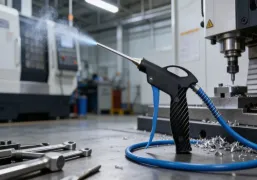
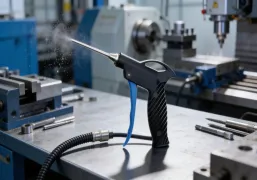
- Coiled Tube — this coiled polyurethane tube stretches out and springs back, handy for tools and equipment that move around.
- Reinforced Tube — braided for higher pressure, built for tougher pneumatic tubing jobs.
- Standard-Grade Tube — fine for regular indoor pneumatic tubing work.
- High-Grade Tube — meant for outdoor exposure, chemicals, or heat that would soften a lesser tube.
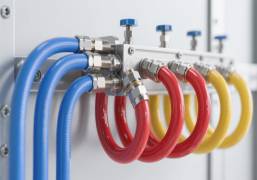
- Clear or Coloured Tube — a colour-coded PU air tube makes spotting the right line during a repair much quicker.
Which variant of PU tube for pneumatic systems you pick really comes down to how much flex you need, what pressure it'll see, and the environment it's sitting in.
Features to Look For
Before settling on a polyurethane tube, a few things are worth checking properly:
- Pressure rating — does it actually match your system, or just come close?
- Wall thickness, since thicker means tougher but thinner bends easier
- Bend radius — tight turns need tubing rated for it, or you'll get kinks
- Material grade, standard for everyday use or high-performance for harsh spots
- Whether it fits your push-in pneumatic fittings without adapters
- Colour, purely so maintenance staff can trace lines fast
A decent PU tube manufacturer will offer real choice across each of these, not just one size dressed up as several.
Trivia: Polyurethane dates back to the 1930s, originally explored as a rubber substitute for industrial coatings.
Product Overview
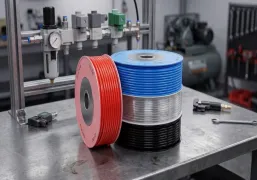
A proper Polyurethane tubing manufacturer will stock a spread of diameters, wall thicknesses, and colours — enough to cover tight control panels and heavy plant lines alike. Straight lengths suit fixed piping runs; coiled tubing handles the stuff that moves. Most of it comes in clear, blue, or black, so tracing a line takes seconds, not guesswork. Batch consistency matters too — swap in tubing with a slightly different wall thickness mid-job, and fittings calibrated for the old profile stop sealing properly.
Benefits
Here are the benefits of PU tubes:
- Flexes over and over without cracking or kinking
- Light enough to route through the tightest gaps
- Shrugs off abrasion from ongoing machine vibration
- Handles a wide swing in temperature without trouble
- Seals cleanly with standard push-fit connectors
- Cuts down on maintenance visits and surprise downtime
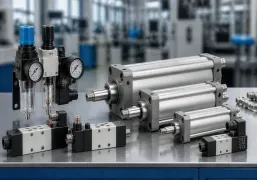
That combination is why an Air compressor PU tube now shows up as standard kit in air prep units, cylinders, and control valves.
Applications & Use Cases
Understand the applications and detailed usage of PU tubes:
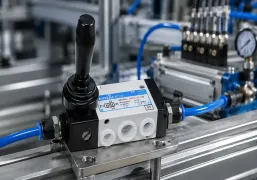
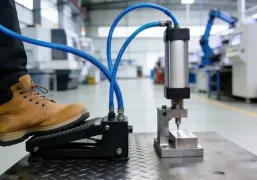
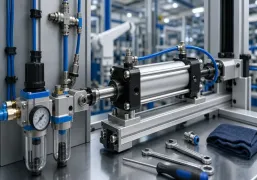
- Pneumatic Systems — compressors, control valves, cylinders, all leaning on pneumatic tubing for steady air delivery
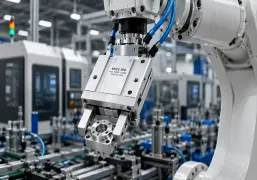
- Automation & Robotics — flexible tubing that keeps up with precise, repetitive movement
- Food & Packaging — hygienic lines for fluid transfer
- Automotive — air lines built into braking and suspension setups
- Textile & Printing — compact tubing fitted onto smaller machines
- Medical Equipment — air hose variants that resist kinking under pressure
- PET Moulding Machines — high-pressure air transmission for stretch blow moulding, where tubing has to survive rapid cycling without giving out
That range alone shows why sourcing from a genuine PU tube manufacturer matters — the same tubing has to perform in wildly different conditions.
Did You Know? A good polyurethane tube can flex several hundred thousand times before fatigue sets in — well past what standard PVC tubing manages.
Comparison: PU Tubing vs. Other Common Tubing Materials
Here is the comparison table of PU Tubing vs. Other Common Tubing Materials:
| Aspect |
Polyurethane Tubing |
PVC Tubing |
Nylon Tubing |
| Flexibility |
High |
Moderate |
Low |
| Abrasion Resistance |
High |
Low |
Moderate |
| Kink Resistance |
High |
Moderate |
Low |
| Temperature Tolerance |
Wide range |
Limited |
Moderate |
| Typical Use |
Pneumatic and automation systems |
Low-pressure fluid lines |
Rigid control lines |
Expert Tips / Buying Guide
Here is the expert tips and buying guide:
- Check the tube's pressure rating against your system's real operating pressure — not the average, the actual peak
- Go smaller in compact systems, larger where airflow demand is higher
- Pick higher-grade material anywhere there's heat, chemicals, or outdoor exposure
- Use colour coding early; it saves time later during repairs
- Confirm fittings match before placing a bulk order, not after
- Established PU tube suppliers in Noida can usually advise on grade based on your machine specs
- Regional PU tubes distributors in Noida tend to hold stock, which helps when repeat orders can't wait
- Sticking with recognised PU tubes dealers in Noida keeps quality steady across every batch you order
Fact: Polyurethane tubing handles oil and grease exposure better than most standard plastic tubing, which is exactly why it suits workshop floors so well.
About VS Enterprises
Established in 2013, VS Enterprises (V.S. Pneumatics) is a leading Manufacturer, Dealer, Supplier, Trader, and Retailer of pneumatic products and industrial automation in India. They have a vast product list that includes pneumatic cylinders, solenoid valves, air regulators, PU tubing, actuators, foot pedals, one-touch fittings, automation accessories, and more. Their offerings include customized products designed for long lasting performance with optimum efficiency and a minimum downtime. They have successfully cater to clients in automotive, food processing, packaging, construction, and manufacturing sectors, thereby gaining a strong foothold in the market through quality, customer satisfaction and quick nationwide deliveries.
FAQs
1. What exactly makes PU tubes different from regular plastic tubing?
Ans: It comes down to the material. Polyurethane behaves almost like a hybrid — flexible like rubber, tough like plastic. So a PU tube bends around corners, survives constant vibration, and shrugs off abrasion in ways PVC or nylon simply can't. That's really the whole reason it took over in pneumatic setups.
2. Can PU tubing handle high-pressure pneumatic systems?
Ans: Yes, within its rated limits. Most polyurethane tubing is built to hold steady under the pressures typical pneumatic systems run at, including fast-cycle machinery like PET moulding lines. Just don't assume every tube handles every pressure — check the rating against your system's actual peak before installing it.
3. How do I know which size PU tube fits my machine?
Ans: Start with your existing fittings and airflow needs. Smaller diameters work fine for compact control panels, while larger ones suit higher-volume air delivery. Wall thickness matters too — thicker holds up better against abrasion, thinner flexes more easily. When unsure, matching your old tube's specs is usually the safest bet.
4. Does PU tubing work in outdoor or high-heat environments?
Ans: Standard-grade tubing is really meant for indoor use. If your setup involves sun exposure, chemicals, or heat near machinery, go with a higher-grade polyurethane tube instead. It resists UV damage and softening far better. Skipping this step is one of the more common reasons tubing fails earlier than expected.
5. Why does PU tubing crack or discolour over time?
Ans: Usually it's UV exposure, extreme cold, or chemical contact wearing the material down. Discolouration is often an early warning sign worth acting on before it turns into cracking. Regular inspection catches this early. Choosing the right grade for your environment from the start prevents most of these issues altogether.
6. Is it worth sticking with one supplier for PU tubes long-term?
Ans: Honestly, yes. Sourcing from the same supplier keeps wall thickness, diameter, and material grade consistent across every batch — which matters more than people expect. Mismatched tubing between orders can throw off fittings calibrated for a specific profile. A steady supply chain saves headaches down the line.
Conclusion
PU tubes didn't become the standard by accident — they hold up where flexibility, strength, and long service life actually matter. Doesn't matter if it's a straight length inside a control panel or coiled tubing on a mobile tool — the right polyurethane tube keeps things leak-free and running the way it should. Check the pressure rating, wall thickness, and grade before you order, not after. It saves money and downtime both. One machine or a whole production line, decent tubing pays for itself.
| Need durable, performance-tested PU tubes for your pneumatic systems? Get in touch with VS Enterprises today for tubing built around what your setup actually needs. |