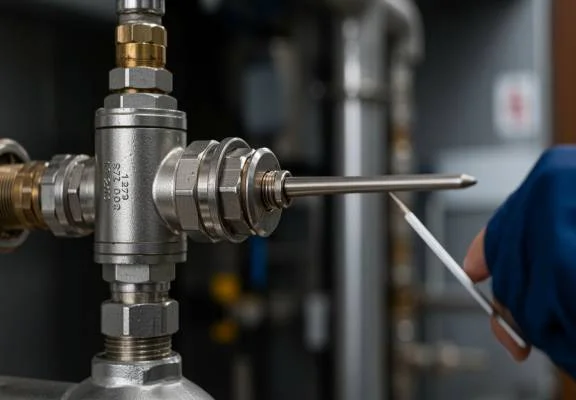
Automation is everywhere in today's industrial world. Machines are getting smarter, systems are becoming faster, and digital controls are improving efficiency. Still, one simple device continues to play a very important role across factories, workshops, and production plants — the hand lever valve pneumatic.
Even with advanced automation, industries still depend on manual control at critical moments. This is where a hand lever valve proves its real value. It is simple, reliable, affordable, and extremely practical for everyday industrial use.
Let us understand why this small component still matters so much.
One of the major uses of hand lever valves is its application in industrial plants where they are used for the usual tasks.
Many machines still require manual operation, especially during emergencies, maintenance work, or power failure situations.
An Automatic Hand Lever Valve Pump is useful, but it cannot handle every situation. When the system fails or the power supply is not available, then manual control becomes necessary. This is exactly where hand lever valves come into the game.
Imagine a machine where an air cylinder needs to extend and retract repeatedly. Using a fully automated system may feel complicated and expensive for such a simple task. In this case, a hand lever valve pneumatic does the job immediately, without complexity.
Another common example is during maintenance work. When technicians need to stop the air supply, they can easily shut it off using a hand lever valve. No electrician is needed. Also, you do not need a control panel.
That is why hand lever valves are still widely used across industries.
Many buyers look at the hand lever valve price and think,
“This is a small item. Why spend more?”
This thinking often leads to problems.
When low-quality valves are used, industries face issues like:
Often, the low price of valves attracts buyers, but in the long run, the cost of replacement can result in extra expenses. If the buyers want to maximise their ROI, they should go for high-quality valves- even if the initial investment is a bit costlier.
When buyers choose high-quality hand lever valves from trusted manufacturers like VS Pneumatics, they get:
Yes, hand lever valves may cost a little more than the traditional valves. However, this expense is negligible when we reduce the additional expenses that may arise in the case of procuring inexpensive and low quality products.
“ I was really worried about the increasing downtime in my machinery manufacturing plant. I was suggested to V.S. Pneumatics by a friend. I must say, collaborating with them is one of the best decisions of my life. Not only did the downtime minimised, I built a long-term business relationship with the platform. Highly recommended.”
“ With exceptional quality hand lever valves by V.S. Pneumatics, our expenses on replacement decreased by almost 40%” and there was a significant increase in smooth industrial automation in my construction business”.
This is a return on investment (ROI). Not just numbers, but reliability and peace of mind.
Many buyers make mistakes by randomly selecting a valve without understanding system requirements. The following parameters will help you select the right valve for your business.
Understand how much air pressure your system uses. And then this valve will handle that pressure with ease or not.
Reliable manufacturers clearly specify pressure ranges, so buyers know exactly what they are purchasing.
Hand lever valves are available in a variety of materials, such as:
Each material suits different plant conditions. You must understand your work conditions like exposure to humidity, rain, and corrosion before investing in the valves.
Always make sure that the valve comes with leak-proof sealing. This is important for increased performance and less load on the compressor.
You do not need any additional tools to install the valve.Simple maintenance saves time and reduces dependence on outside technicians, thereby reducing wastage of money.
Don't always look for the lowest price. Always compare quality, durability, and long-term service cost.
A slightly higher upfront cost often results in lower overall expenses.
| Feature | Low-Grade Valve | Quality Valve |
|---|---|---|
| Sealing | Poor | Accurate and tight |
| Product Life | Short | Long |
| Maintenance | High | Low |
| Operation | Rough | Smooth |
| Safety | Low | High |
This comparison clearly shows why quality matters more than just price.
Even though automation is growing fast, manual control devices have not lost their importance. The valves are usually used in:
Trusted hand lever valve manufacturers offer high quality. The price might seem to be a bit high in the initial stage but when looked at from a broader perspective, businesses can ensure excellent ROI.
The hand lever valve pneumatic might look simple, but it is vital to how things run each day. It gives solid control and safety when you need to act fast by hand, mainly if machines can’t react in time.
Savvy buyers see this valve as a lasting investment, not just a small buy. A good valve makes work easier, cuts down on repair problems, and keeps your plant running well for years.
If you’re upgrading or changing out pneumatic parts, choosing the correct hand lever valve makes a real difference. Reach out to VS Pneumatics today for the best options that make your workflow better and give you better results from day one.
The hand lever is used to manually control the flow of air in a pneumatic system. By moving the lever, the operator can easily start, stop, or change the direction of airflow.
A lever operated valve is a pneumatic valve that works through manual movement instead of automation. Companies like VS Pneumatics design these valves for smooth operation, safety, and reliable daily use in industrial setups.
Common types of pneumatic valves include hand lever valves, push button valves, solenoid valves, foot-operated valves, and directional control valves. Each type is chosen based on how much control and automation the system requires.
A hand control valve is a manually operated valve that allows direct control of air flow. It is commonly used where simple operation, quick response, and manual override are important.