A practical comparison for engineers and buyers choosing the right drainage solution for compressed air systems.
Moisture builds up fast inside a receiver tank. Cooling air means condensing water, and that water doesn't stay put — it travels straight into the line itself. Getting it back out is non-negotiable, and the valve doing that job ends up dictating corrosion rates, filter life, even product quality downstream.
Two approaches handle this job: the Automatic Drain Valve and the Manual Drain Valve. Both clear water and oil residue from pneumatic lines, but how they do it couldn't be more different — one runs itself, the other needs someone to remember. Which actually holds up better over months of real operation? That's what this comparison sets out to answer.
What is an Auto Drain Valve?
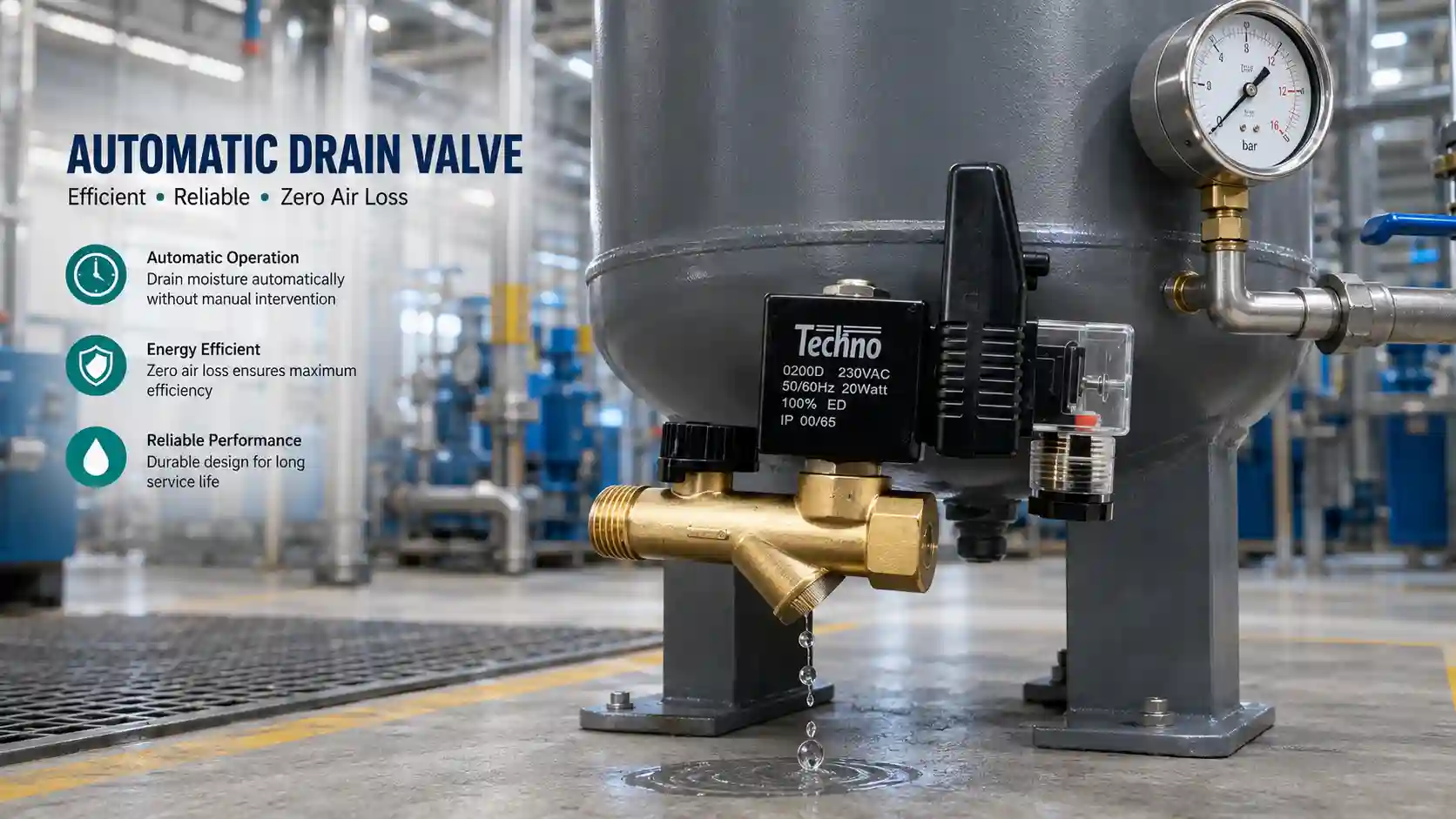
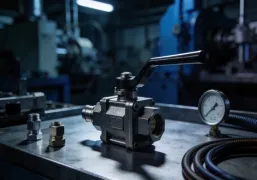
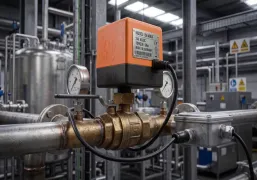
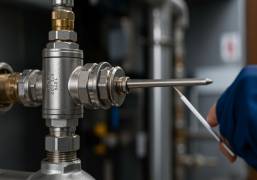
Install an Auto Drain Valve at the lowest point of a compressor, receiver tank, or filter housing, and it takes over condensate removal on its own. No operator input needed. A timer cycle or a float mechanism senses water buildup, opens briefly, releases it, and closes again.
It's essentially a Compressed Air Drain Valve that never clocks out. Because drainage happens continuously, moisture doesn't get the chance to pool and eat away at pipework from the inside. Bodies come in brass, stainless steel, or aluminium, sized for anything from a small workshop unit to a large industrial receiver — which is why buyers comparing Auto Drain Valve Manufacturers in India tend to find several material options on the table.
Why is it Important?
A Pneumatic Drain Valve setup that skips proper drainage doesn't stay reliable for long — neither do the cylinders sitting next to it. Compressor oil mixes with standing water to form a sludge, and that sludge clogs filters while wearing down valve seats from the inside. Corrosion follows if nobody catches it early, and solenoid valves down the line pay the price in shortened service life.
- Rust spreads unchecked, weakening receiver tank structure over time
- Sensitive pneumatic instruments take damage from carried-over moisture
- Why do filters clog faster than expected? Oil-water sludge is usually why
- Efficiency drops and energy bills climb once drainage gets neglected
|
Did You Know?
Depending on ambient temperature and duty cycle, a single humid compressor can produce several litres of condensate in just one day.
|
Types and Variants
Two operating categories cover most of the market, plus a manual option that predates both.
- Timer-Based Automatic Drain Valve. Opens at fixed intervals regardless of buildup — simple and predictable, though it can waste air if the timer fires too often.
- Float-Type Automatic Drain Valve. A rising float triggers drainage only when water level demands it, making this the more air-efficient pick for swinging loads.
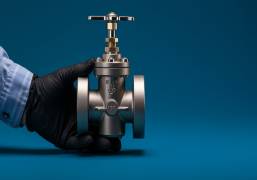
- Manual Drain Valve. Just a ball or cock valve opened by hand. Nothing electronic to fail, but it lives or dies on human memory.
Plenty of facilities run both together — an Automatic Drain Valve on the primary receiver, a Manual Drain Valve as backup on smaller branch lines, ready for the moments power or air supply drops out.
Features to Look For
A few practical checks separate a good fit from a poor one:
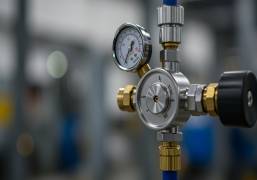
- Confirm the pressure range covers your compressor's maximum output, typically up to 16 bar
- Brass and stainless steel outlast standard aluminium in humid plant conditions
- BSP thread compatibility with existing pipework, worth checking early on
- Timer-based suits predictable use; float-type handles swinging loads better
- Fewer internal parts usually means faster servicing later
Skip these checks and a Pneumatic Drain Valve tends to underperform, or need replacing sooner than expected.
Product Overview
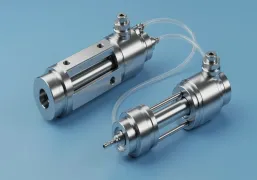
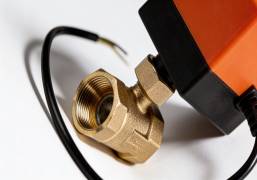
VS Enterprises stocks a full range of Automatic Drain Valve units for air compressors, receivers, and filter housings, covering timer-based and float-type control in brass, stainless steel, and aluminium bodies.
As one of the established Auto Drain Valve Suppliers in India, the range stretches from small workshop compressors to large-capacity industrial receivers, built on standard BSP threading for simple retrofitting. Float-type models need no wiring — install them and they run, a plug-and-drain simplicity plants ask for when dependable condensate removal is non-negotiable.
Benefits
Here are some of the benefits:
- Protection runs around the clock, so moisture never sits long enough to cause damage
- Labour costs fall once nobody's opening valves by hand
- Fittings and valve seats last longer with fewer corrosion issues
- Forgotten drainage stops being a possibility altogether
- Float-type units drain only when needed, saving air and energy
Take an Auto Drain Valve out of the equation and one recurring maintenance task disappears, quietly extending the service life of everything downstream, from cylinders to solenoid valves.
|
Trivia
Early industrial compressors relied entirely on manual petcocks — automatic condensate drainage only became standard practice decades later.
|
Applications and Use Cases
Some of the applications are:
- Pneumatic lifts, impact tools, and paint spray lines in automotive workshops
- Bottling and packaging lines where wet-air contamination isn't an option
- Textile units running pneumatic looms, notoriously sensitive to moisture
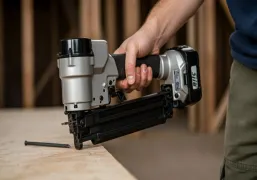
- Construction sites running drills and nailers through humidity swings
- PET moulding lines, where product quality hinges on steady air pressure
A Compressed Air Drain Valve on a single small compressor solves one problem; a bank of receivers feeding an entire floor is a different scale — but the principle stays the same. Match the valve to the duty cycle and the whole system stays cleaner for longer.
Auto Drain Valve vs Manual Drain Valve: Comparison Table
Understand the difference between auto drain valve and manual drain valve with the following comparison table:
| Aspect |
Auto Drain Valve |
Manual Drain Valve |
| Operation |
Self-triggered by a timer or float mechanism |
Someone has to physically open the valve |
| Consistency |
Condensate clears out at steady intervals, every time |
Only as reliable as whoever remembers the schedule |
| Labour Involvement |
Set it up once and it keeps running |
Daily or weekly checks stay on someone's list |
| Risk of Missed Drainage |
Low — the mechanism doesn't forget |
Climbs fast in busy or understaffed plants |
| Best Suited For |
Continuous, largely unattended operations |
Smaller setups with close daily supervision |
| Long-Term System Health |
Tends to hold up better with steady moisture removal |
Vulnerable whenever a drain cycle gets skipped |
|
Fact
Moisture left inside compressed air lines is one of the leading causes of pneumatic component corrosion in Indian industrial plants.
|
Expert Tips and Buying Guide
Here are the major expert tips and buying guide:
- Nameplate maximum isn't the number to trust — match rating to actual output
- Coastal air or high humidity? Stainless steel bodies hold up better there
- Unsure about timer versus float? Any Auto Drain Valve Trader in India can walk through the trade-offs
- Even automatic units need periodic checks, since sediment can block small ports
- A Manual Drain Valve kept as backup covers moments when downtime isn't acceptable
The cheapest option rarely turns out cheapest overall. A valve failing mid-production costs far more than whatever gap separated it from a properly rated unit.
About VS Enterprises
Established in 2013, VS Enterprises (V.S. Pneumatics) is a leading Manufacturer, Dealer, Supplier, Trader, and Retailer of pneumatic products and industrial automation in India. They have a vast product list that includes pneumatic cylinders, solenoid valves, air regulators, PU tubing, actuators, foot pedals, one-touch fittings, automation accessories, and more. Their offerings include customized products designed for long lasting performance with optimum efficiency and a minimum downtime. They have successfully cater to clients in automotive, food processing, packaging, construction, and manufacturing sectors, thereby gaining a strong foothold in the market through quality, customer satisfaction and quick nationwide deliveries.
FAQs
1. How is an Auto Drain Valve different from a Manual Drain Valve?
Ans: Automation is the real difference here. An Auto Drain Valve drains itself — timer or float controlled, no hands required. A Manual Drain Valve waits on someone to open it by hand, and that dependency is where things go wrong. Miss one scheduled drain and moisture just sits there, doing damage.
2. How often does an Automatic Drain Valve need maintenance?
Ans: Not much, actually. Sediment can work its way into small drain ports over several months, so a periodic look still helps. Float-type models generally need less attention than timer-based ones do. Catching a partial blockage early beats discovering it once the valve has already stopped draining properly.
3. Can a Pneumatic Drain Valve handle high-pressure industrial setups?
Ans: Definitely — industrial-grade units are built for exactly that. Pressure ratings on most models stretch up to 16 bar, well past typical workshop demands. Before installing anything, though, check that rating against what your compressor actually outputs. Getting that match right is what keeps performance steady for years.
4. Is a timer-based or float-type Automatic Drain Valve better?
Ans: It depends on the load. Timer-based valves suit predictable, steady compressor use and cost less upfront. Float-type valves drain only when water actually builds up, making them more air-efficient for setups with fluctuating demand. Facilities running unpredictable loads usually see the float-type option pay off faster.
5. If I already run an automatic unit, is a Manual Drain Valve still worth keeping?
Ans: A good number of plants run both, for solid reason. The automatic unit covers everyday drainage while a manual valve waits in reserve for power outages or air-supply hiccups. Together they cover routine operation and the unexpected — a safety net most continuous production lines are glad to have.
6. What body material should I choose for a Compressed Air Drain Valve?
Ans: It comes down to where the plant sits. Coastal air and humid conditions favour brass or stainless steel, since plain aluminium corrodes faster there. Drier, lower-demand settings can get by fine on aluminium instead. Let actual site conditions guide the decision rather than picking whatever costs least.
Conclusion
A well-run compressed air system usually has room for both valve types. Push into continuous, high-demand operations, though, and an Auto Drain Valve pulls ahead — better reliability, lower labour costs, stronger protection over time. Small setups with someone watching closely each day can still get by on manual valves. Beyond that scale, automatic drainage is the safer bet for protecting equipment over the years ahead.
Get in Touch Today!
|
Ready to upgrade your compressed air system? Reach out to VS Enterprises for dependable Auto Drain Valve solutions built for Indian industrial conditions.
|