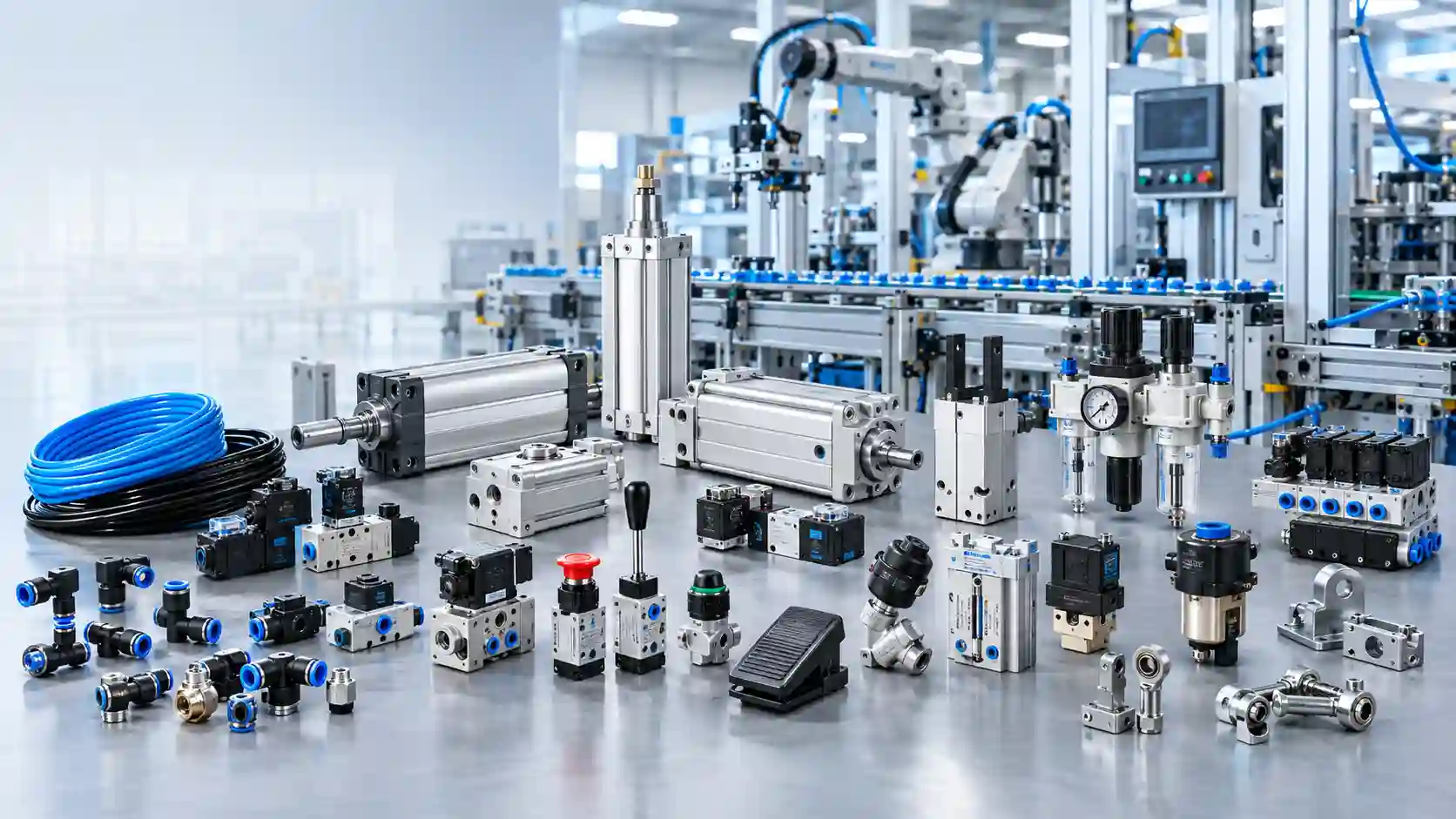
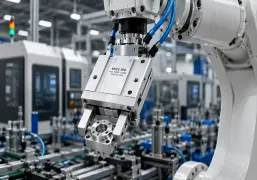
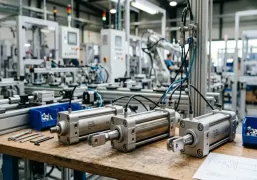
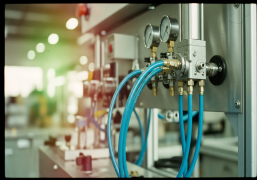
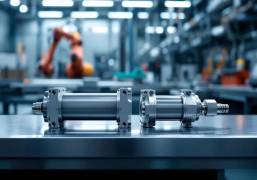
Have you ever seen a factory that was very smooth? It's not random — once again a pneumatically positioned valve doing the work. Pneumatic valves have been slipping into the urgency category, quietly becoming an essential component in the manufacturing transition to faster cycles and leaner operations. They precisely regulate air flow, maintain machine responsiveness and support production lines to run without any pauses.
Industries are increasingly turning to pneumatic automation components to reduce downtime and increase production—from automotive assembly and packaging to food processing, textiles and heavy machinery. In any upgrade or a new system for industrial automation, it is no longer an option but a must to understand the types, working principle, and applications of industrial pneumatic valves. This guide explains it all and will help you to purchase smarter and to build better.
Pneumatic Valves – What Are They?
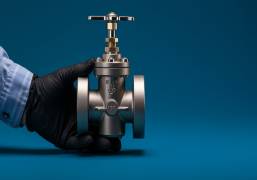
A pneumatic valve is a mechanical device used to regulate the direction, flow and pressure of compressed air in a pneumatic system. Imagine that it is the traffic cop that determines where air goes, when it goes there and how much pressure is attached to it.
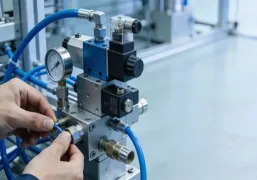
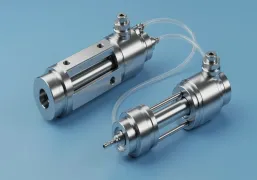
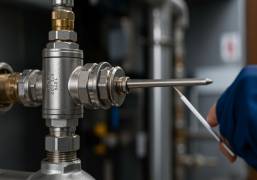
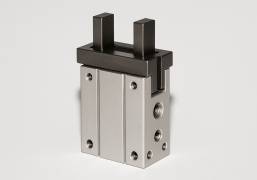
Most pneumatic valves are structurally similar, with a valve body, an internal spool or poppet, an actuator and ports for air lines. Activated — by hand, machine or electronically, the internal mechanism moves to either open or close certain air passages.
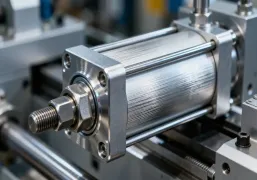
This places pneumatic valves as basic components in any system that is operated by compressed air, such as pneumatic cylinders and actuators. It is an air control valve, which does not create force, but it only releases energy that is already contained in the compressed air, into a controlled and usable motion in machines and production lines.
How do Pneumatic Valves Works?
The pneumatic valve working principle is not rocket science, it is oddly satisfying when it clicks: Here's how air becomes action step-by-step.
- Compressed air enters the system — The compressed air is supplied by a compressor, which stores energy that can be used later in the pneumatic system.
- The valve receives a signal — Manual switch, solenoid, or sensor trigger tells the pneumatic control valve it's showtime.
- Spool shifts position — In the valve, the position of the spool changes to open one air path and to close another.
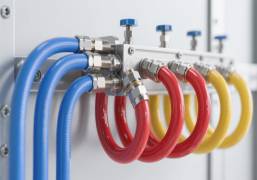
- Air flows in the right direction — Redirected air is directed towards the actuator/cylinder.
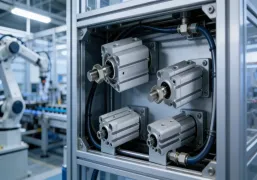
- Actuator transforms air into action — Pressure causes the piston or rotor to move, providing linear or rotary motion.
- Exhaust air releases -– Circulating air is sent out of the exhaust port, and the cycle begins anew with the next command.
Main Components of a Pneumatic Valve
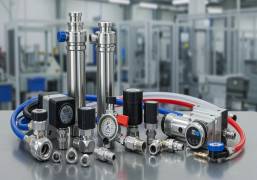
Just take any valve, and a handful of parts will demonstrate some serious teamwork. The valve body is the housing, the outer shell, made of aluminum or brass and contains all the other pneumatic valve components. The spool slides back and forth inside to open or close air paths and the ports are the openings which allow air to flow in and out of the spool. Seals are made of rubber or polymer and are used to prevent any leakage between the chambers. When the power is shut off, the solenoid coil is no longer energized and the spring mechanism returns the spool to its normal state. These pneumatic valve parts combine to create a precision controlled system which is just a metal casing without them.
Different Types of Pneumatic Valves
Not all valves are built the same — knowing your pneumatic valve types saves you from picking the wrong one down the line.
Solenoid Valves
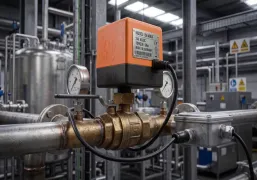
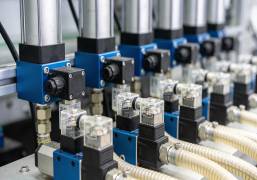
Solenoid valves are the doers, the movers, the pioneers of the pneumatic world - no manual switches, no delays, just instant response. A pneumatic solenoid valve is a device that is operated by the magnetic force of an electromagnetic coil that moves an internal spool when it is given an electrical signal. The plunger is drawn by a magnetic field generated by the coil when it is energized, thus opening or closing the air path in milliseconds.
This is the reason solenoid valves are a preferred choice for applications that require a fast and reliable response, such as in robotic arms that can't afford a delay, or in packaging units and assembly lines.
SMC and Janatics are well known brands here. An SMC solenoid valve is renowned for its small size and invariable performance in high-cycle applications, whereas a Janatics pneumatic solenoid valve features dependable operation and cost-effectiveness for automation in Indian manufacturing platforms.
Directional Control Valves
In the case of solenoid valves (messengers), the directional control valve (DCV) is the one that is actually diverting traffic. These valves control the precise control of the extension and retraction of cylinders and influence the movement of air in a system.
These are usually organised by port and by a number of positions:
- 2/2 valves — A valve or set of valves that operate to control airflow in two directions: on or off.
- 3/2 valves — Three ports, two positions, suitable for a single acting cylinder.
- 4/2 valves — Four ports, two positions; used for double acting cylinder control usually.
- 5/2 valves — Five ports, two positions; provides dual exhaust to smooth and rapid cylinder motion.
The selection of the appropriate pneumatic cylinder valve types depends on the application: how fast and how often the cylinder moves. If you've got it right, your automation will operate smoothly and without any resistance.
Flow Control Valves
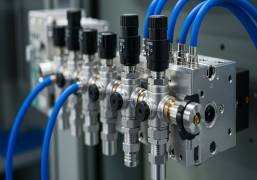
Have you ever witnessed a cylinder speeding into position and slamming? The function of the flow control valves is to prevent that. A pneumatic flow control valve can be used to control the rate that air flows into or out of a cylinder, giving you smooth, controlled air movement as opposed to jerky, unpredictable movement.
An SMC flow control valve is used here with a high degree of trust and is known to give accurate adjustment and durability in a high cycle industrial application. From delicate assembly work to heavy-duty machinery, the right speed of the cylinder is often the sole component you may miss out on.
Pneumatic Push Button Valves
Not all systems have to be smart, sometimes simple is better. A pneumatic push button valve is a manually operated push button valve that is operated using a push button by an operator without the need for wiring or electricity.
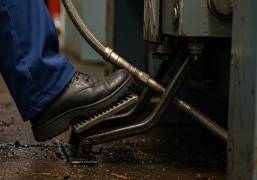
That's why it's a good option for a manual pneumatic valve in applications where electrical control isn't feasible, cost-effective or even essential — such as simple clamping stations, manual assembly jigs, and safety-critical stop functions.
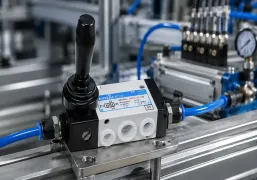
Hand Lever Valves
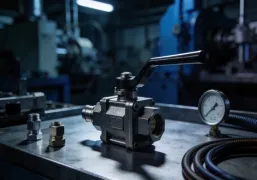
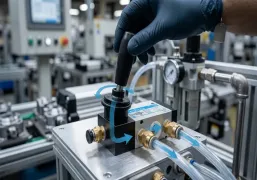
Hand lever valves provide the required control in some cases when it needs to feel real. With a hand lever valve, operator control of pneumatic functions is immediate and intuitive, with a push-pull movement.
A pneumatic hand lever valve is good for simple installations where fast and easy manual operation is important, such as clamping fixtures, simple machine controls, or back-up override systems.
Angle Valves and Their Industrial Applications
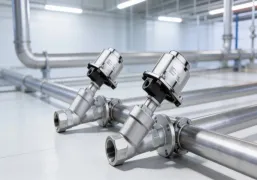
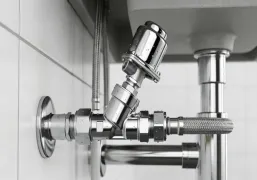
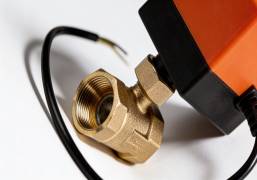
When space is limited, creative solutions are often required in machine layouts, and angle valves are the perfect solution. Pneumatic Angle Valves are a right angle design, making it possible to direct air flow efficiently without additional fittings or bulky pipe.
Compact design for easy installation in confined areas with good flow control and sealing properties. Common angle valve application areas include packaging lines, tank systems, and machinery where straight-line piping simply isn't practical.
Industrial Applications of Pneumatic Valves
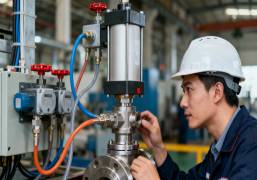
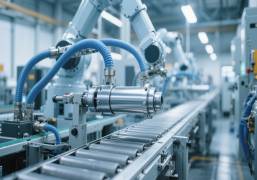
If you enter any factory floor today, you're likely to find an industrial pneumatic valve in operation as the unsung hero in the background – here's where they really make a difference.
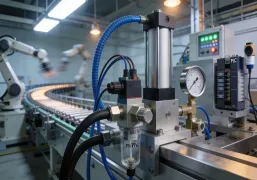
- Automotive manufacturing — whether on a welding station or assembly line, valves manage cylinders that move repetitively and quickly, causing no stress.
- Packaging industry — The fast and accurate production line demands precise air control through sorting, sealing and labeling machines.
- Pharmaceutical industry — Valves control clean, contamination-free air systems which are essential to the dosing, filling and packaging of sensitive products.
- Food processing — Hygienic pneumatic components aid in the sorting, filling and packaging of food and conform to strict safety standards.
- Assembly operations — Whether it's fastening or fixture control, valves provide consistent and efficient repetitive assembly work tasks across shifts.
The pneumatic valves applications range from sectors that would be unable to operate at volume without reliable air control. It could be speed, accuracy or cleanliness; in most cases, it's something you'll never notice, a pneumatic valve.
Benefits of Using Pneumatic Valves in Industries
If you're still on the fence about pneumatic systems, here's the honest pitch — the benefits of pneumatic valves go way beyond just moving air around.
- Quick response time — Air pressure responds practically immediately with no compromise on production rates.
- Pressure relief (literally) — With less moving parts there are less opportunities for surprise failure during long shifts.
- Less maintenance required — Less maintenance required over time with simple mechanisms.
- Space-saving design — Compact and can be installed easily in tight machine layouts without compromising performance.
This is why industrial pneumatic valves are a tried and tested option in all manufacturing setups, no matter how modern, they are still proving their worth.
Why Choose a Reliable Pneumatic Valve Supplier?
A valve can be sold to you by anyone. It is not everyone who can promise that it will not let you down when you are in the middle of three months' production. The value of a trusted pneumatic valve supplier is not what is done during the purchase, but what occurs after that during operation of your line when you need backup on a quick time.
VSP Pneumatic has earned its credibility as a pneumatic valve manufacturer in India solely because they know what Indian factory floors are like, every day. Temperatures, dust, ceaseless cycles, short deadlines. Products are engineered for that reality, and not a lab. When it comes to troubleshooting, there's someone with a real solution in mind, not a generic troubleshooting script.
At some point, all plants get the message: it's as important to know who supplies the part as it is to know who supplies the plant.
FAQs
1. What is the main function of a pneumatic valve?
A pneumatic valve controls the direction, flow, and pressure of compressed air within a system. It essentially manages how air moves to power cylinders, actuators, and other machine components.
2. How do I choose the right pneumatic valve for my application?
It depends on factors like port size, actuation type, and pressure requirements specific to your machine. Consulting with your supplier's technical team usually gets you the fastest, most accurate match.
3. Can pneumatic valves be used in high-speed automation systems?
Yes, valves like solenoid and directional control types are built for exactly that. Their fast response time makes them ideal for high-cycle, automated production environments.
4. What makes VSP Pneumatic a reliable choice for industrial valves?
VSP Pneumatic combines quality manufacturing with strong technical support tailored to Indian industrial conditions. That means fewer compatibility issues and dependable performance on the factory floor.
5. Which industries rely most heavily on pneumatic valve systems?
Automotive, packaging, pharmaceuticals, food processing, and CNC machining are among the top users. Any industry needing fast, precise, and repeatable automation typically depends on pneumatic control.
Improve Industrial Efficiency With the Right Pneumatic Valve Solution
Now, it's evident that pneumatic valves are not just another part of the system; they're the unsung heroes ensuring smooth and efficient production. It will result in downtime, fluctuation in output and recurring headaches in the future, if you get the selection wrong.
Make it right, and your machines just work!
This is why it is important to work with a good pneumatic valve supplier the first time.
From the ground up or as part of an existing automation solution, VSP Pneumatic provides the reliability and technical support to ensure the first time success.