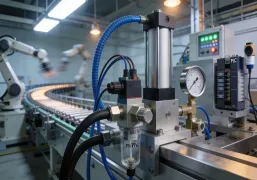
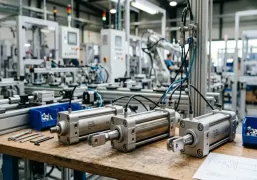
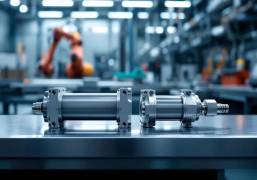
Ask any machine designer what keeps a project dragging past the deadline and you'll hear the same answer nine times out of ten — space. Not the budget. Not the component lead time. The millimetres. You get the design sorted, the force calculations done, and then realises the actuator body hits a guard rail or a neighbouring axis and suddenly the whole thing needs to shift.
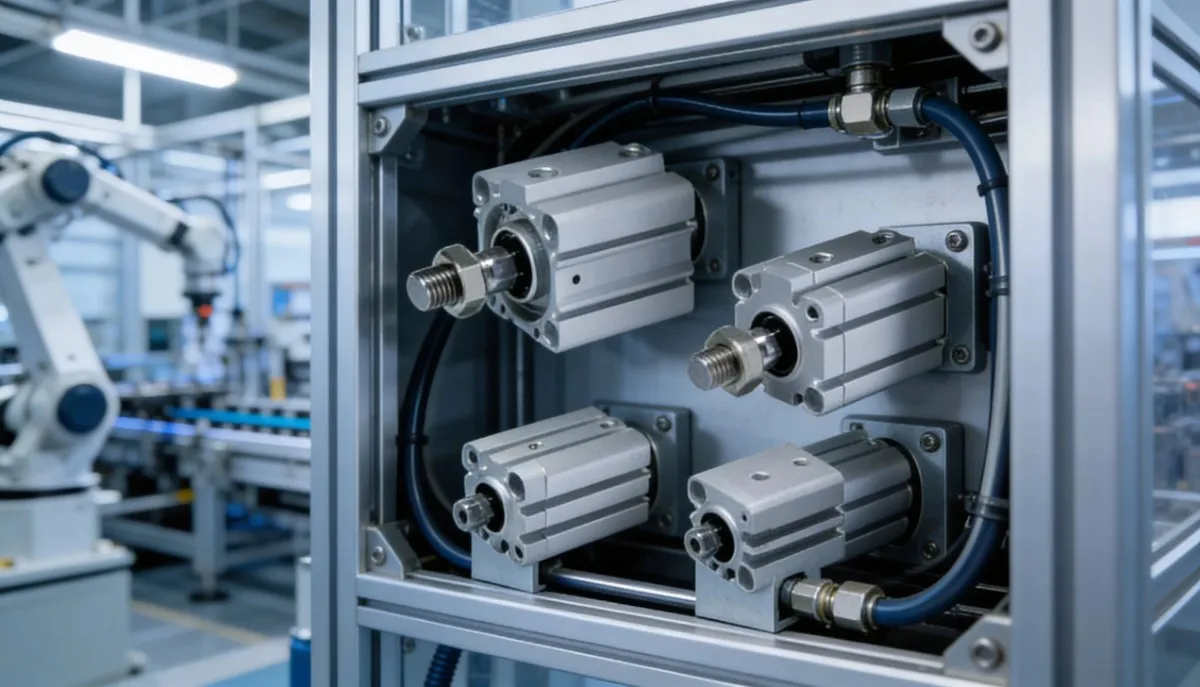
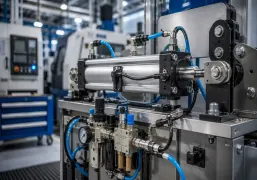
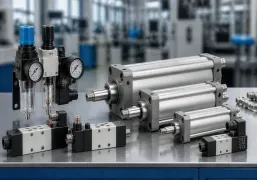
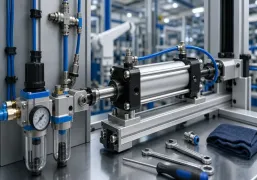
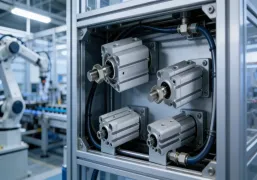
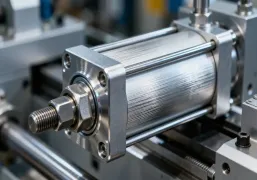
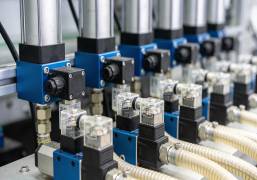
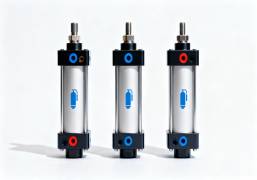
Pneumatic compact cylinders were built for exactly that moment. Not as a compromise or a cut-down version of a standard unit — but as a purpose-engineered answer to installations where a full-length cylinder simply won't sit. The body is shorter, the port placement is rethought, and the end caps are trimmed — but the bore and the output force stay the same. That matters a lot when you're trying to hit a force spec and can't afford to go up a bore size just to compensate for a weaker design.
And it's not a niche application anymore. Across Indian manufacturing — automotive, pharma, food processing, electronics — the trend toward tighter machine envelopes has made pneumatic cylinders in compact format a standard consideration, not an afterthought.
How These Things Actually Work
The operating principle behind a pneumatic cylinder is pretty straightforward. Compressed air goes in one end, pushes the piston, drives the rod out. Reverse the air and it comes back. That's pneumatic cylinder operation at its core, and it hasn't changed much in decades. What changes with a compact design is everything around that core — shorter body length, repositioned ports, redesigned cushion chambers — all engineered to shrink the installed footprint without touching what the cylinder actually delivers.
Technical Specs Worth Checking Before You Order
Keep the following technical specifications in mind before choosing a pneumatic cylinder:
- Bore diameter — typically 8 mm to 100 mm in compact variants; directly sets your output force
- Stroke length — compact models usually cap around 5 to 100 mm; longer strokes need standard bodies
- Operating pressure — 0.05 to 1.0 MPa; most factory lines run 0.4 to 0.6 MPa comfortably
- Rod material — chrome-plated for general use, stainless steel where washdown or corrosion is a factor
- Mounting style — through-hole, foot, flange; pick based on your frame geometry, not just availability
- Cushioning — adjustable end cushioning matters enormously on high-cycle applications; don't skip it
- Sensor slots — T-slot or C-slot on the body for direct magnetic switch mounting saves real installation time
Where Compact Cylinders Show Up Most
The reach of pneumatic systems using compact actuators is wider than most buyers expect. Here's a snapshot across industries:
| Industry |
How They Use It |
| Automotive Assembly |
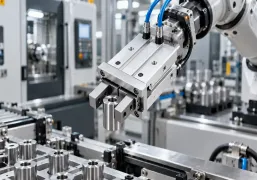
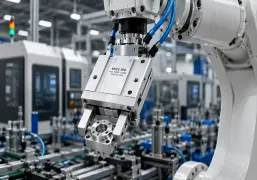
Clamping jigs, part pressing, robotic arm end-effectors |
| Food & Beverage |
Filling heads, capping stations, hygienic portioning lines |
| Electronics |
PCB handling, pick-and-place heads, component feed units |
| Pharmaceutical |
Blister pack tooling, tablet press actuation, vial handling |
| Textiles |
Thread tension control, fabric guides, shuttle mechanisms |
| Packaging & Print |
Label heads, web cutters, folding and sealing stations |
The Main Variants — and When to Pick Which
Not all compact cylinders are the same thing. Distributors and Pneumatic cylinders Traders in Noida stock several configurations, each suited to different motion requirements:
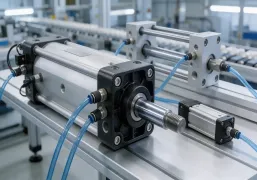
- Double-acting — air drives both directions; go-to choice for anything needing consistent push and pull force
- Single-acting with spring return — spring handles one stroke; used a lot in clamping where fail-safe hold matters
- Guided compact — built-in linear guides stop the rod from rotating; essential when lateral loads are in play
- Flat/thin profile — ultra-low height body for the most extreme vertical clearance restrictions
- Multi-position — allows mid-stroke stops; suits indexing tables, escapement mechanisms, sorting units
Features, Benefits, and What Buyers Often Miss
Sourcing air cylinders in compact format isn't harder than standard — but the margin for a wrong spec is tighter. A few things that regularly get overlooked:
- Port position flexibility — side and end porting options matter when your pipework doesn't align perfectly (it rarely does)
- Non-rotating rod versions — if angular repeatability is part of the task, standard rods won't hold position reliably
- Seal material — NBR is fine to around 70°C; above that, specify FKM or the seals will fail faster than expected
- IP rating — compact doesn't automatically mean sealed; check if the application needs protection against dust or coolant splash
The Practical Upside for Procurement and Engineering
The benefits of specifying high-quality pneumatic products in compact format go beyond just fitting into the space. Lighter moving mass shortens cycle times. Less actuator weight reduces moment loads on robotic structures. Standardised port sizing keeps your fittings and spare parts consistent across the facility — which sounds minor until you're doing a 2 AM repair and the right fitting isn't on the shelf. And maintenance teams genuinely appreciate the simplified swap-out when seals eventually wear; compact units from a solid manufacturer come apart and go back together without special tooling.
The Engineering Behind It — Because 'Compact' Isn't Just Smaller
Here's something worth understanding if you're evaluating pneumatic products seriously. A compact cylinder isn't a standard cylinder that someone filed down. The bore-to-body ratio, the internal piston guidance, the cushion chamber volume, the port throat diameter — all of it gets redesigned from scratch when engineers move to a compact platform. That's why a well-made compact unit can match the force output of a full-length cylinder at the same bore. The physics don't change; the packaging does.
Material quality is where the difference between a five-year cylinder and a five-month one lives. Precision-extruded aluminium alloy bodies, hard anodised bores, ground chrome rods with surface finishes tight enough to protect polymer seals through millions of cycles — these aren't marketing specs. They're what determine whether a cylinder on a 24/7 production line holds up or starts weeping air by month eight. When you're comparing quotes from pneumatic cylinders Suppliers in India, this is worth pushing on. Ask for seal life ratings. Ask what bore finish tolerance they hold. A supplier who can answer those questions is one worth doing business with.
About VS Enterprises
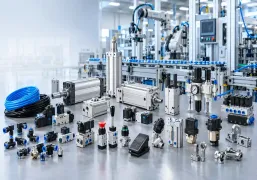
VS Enterprises (V.S. Pneumatics) is a well-respected distributor and authorized distributor of pneumatic components. The company has been supplying high-quality pneumatic and industrial automation components to customers in India since 2013. The product line includes pneumatic cylinders, solenoid valves, air regulators, PU tubing, one-touch fittings, actuators, foot pedals, and all other accessories required for a successful and efficient automated production system. The goal is to provide durable, high-performance components that enable manufacturing and production facilities to improve their operating efficiencies while reducing their downtime. VS Pneumatics serves the automotive, manufacturing, packaging, food processing, and construction industries. With years of experience in the pneumatic industry, VS Pneumatics will assemble successful and long-term relationships by providing an excellent quality product, customer service, and on-time delivery to the entire country of India.
FAQs
1. What are compact pneumatic cylinders used for?
Ans: Compact pneumatic cylinders are used in machines where installation space is limited but reliable linear motion is still required. Common applications include clamping systems, packaging machinery, robotic arms, pick-and-place units, PCB handling systems, and automated production lines.
2. How are compact pneumatic cylinders different from standard cylinders?
Ans: The main difference is body length and installation footprint. Compact cylinders are designed with shorter bodies and reduced overall dimensions while maintaining similar force output for the same bore size. They are ideal for tight machine layouts and compact automation systems.
3. What industries commonly use pneumatic compact cylinders?
Ans: Industries that frequently use compact pneumatic cylinders include:
- Automotive manufacturing
- Food and beverage processing
- Pharmaceutical production
- Electronics and PCB assembly
- Packaging and printing
- Textile machinery
4. How do I choose the right bore size for a pneumatic cylinder?
Ans: Bore size depends on the force requirement and operating pressure. Larger bore diameters generate higher output force. Before selecting a cylinder, engineers should calculate the required force, cycle speed, load condition, and available installation space.
5. What is the normal operating pressure range for compact pneumatic cylinders?
Ans: Most compact pneumatic cylinders operate between 0.05 MPa and 1.0 MPa, while many industrial production lines commonly run between 0.4 MPa and 0.6 MPa.
6. Which material is best for pneumatic cylinder rods?
Ans: Chrome-plated steel rods are suitable for standard industrial applications, while stainless steel rods are preferred for corrosive, humid, washdown, food-grade, or pharmaceutical environments.
Conclusion
There's a tendency in procurement to treat actuator sourcing as a commodity exercise — same bore, same stroke, lowest price wins. That works fine until it doesn't. A good Pneumatic Products Manufacturer pushes back on the spec before quoting. They ask about cycle rate, ambient temperature, mounting orientation, expected service intervals. That conversation is where failures get caught before they're installed, not six months into a production run.
If you're scoping out pneumatic compact cylinders for a new machine or a retrofit, work the application requirements first. Space envelope, force, cycle speed, environment — nail those, then pick the product. Whether it's a single prototype or a bulk line order, getting the spec right the first time is always cheaper than getting it wrong. Good pneumatic systems don't demand attention. They just run — and that's exactly what they're supposed to do.
Need compact pneumatic cylinders? Call us for bulk pricing, application support, and fast delivery across India.