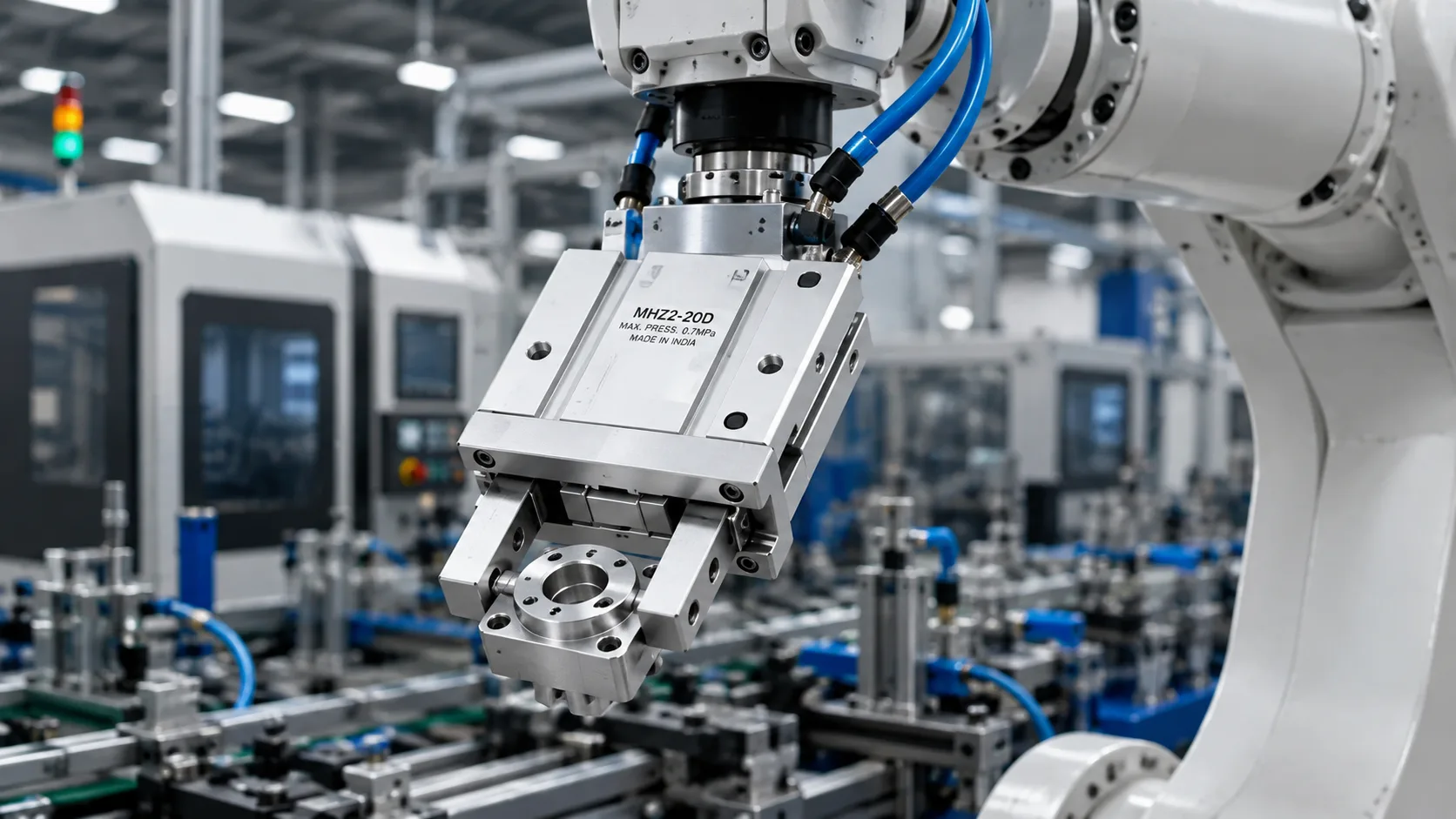
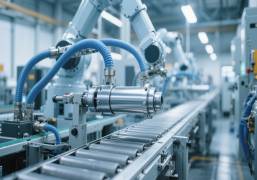
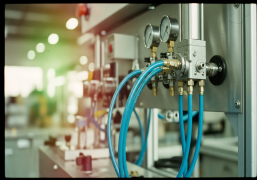
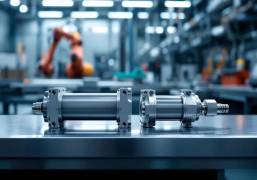
Ever watched a robotic arm grab a part clean, no drop, no crack? That's not chance. That's a solid Robot End Effector doing exactly what it's built for — the very tip of the arm, the bit that actually makes contact. And out of everything out there, the Parallel Gripper is the one you'll keep bumping into. Assembly lines. Packaging floors. Pick-and-place cells. Pretty much everywhere. Simple reason too, it's tough, it's straightforward, and it doesn't quit on you. This piece gets into what it is, how it actually functions, the variants floating around, and where it pulls its weight on a shop floor. Worth the read. Get this one wrong and the headaches pile up fast, further down the line.
What Is a Parallel Gripper?
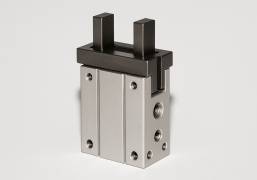
Picture a Mechanical Gripper, two jaws, sometimes more, sliding toward each other or apart, but always dead straight, parallel, never that scissor-swing motion some other grippers use. Both sides move the same distance at the same time. So whatever's caught between them stays centered, doesn't matter where it lands inside the stroke. Small detail. Except when you're running pick-and-place all shift, it's the difference between smooth output and constant recalibration.
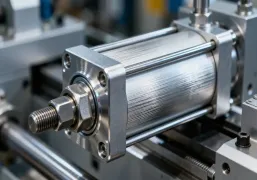
Most run on compressed air, hence the name Pneumatic Gripper gets thrown around loosely. Air hits a piston, piston shifts, and that shift turns into jaw movement, both sides moving in sync, always together, never one ahead of the other. No fancy electronics in the base design. That's honestly half the reason these hold up so well year after year.
Why Is It Important?
- Keeps the part centered, so misalignment stops being a daily headache
- Small footprint. Works as a neat Automation Gripper even on crowded machines
- Grip force stays consistent, so fragile parts don't crack under pressure
- Jaws adjust to different sizes, cutting down changeover time
- Repeats the same motion reliably, cycle after cycle
Factories don't really have a choice anymore. A solid Robotic Gripper isn't a nice-to-have; it's what keeps cycle times short and rejects low, shift after shift.
Types & Variants
Not every parallel gripper is built the same way. A rough breakdown:
- Pneumatic Parallel Gripper — air-driven, quick cycling, the go-to for assembly and packaging setups
- Electric Parallel Gripper, this one's servo-controlled, programmable force, programmable stroke, good when your line handles a mix of parts instead of just one
- Two-jaw or three-jaw? Two-jaw works fine for flat, rectangular stuff. Three-jaw's better with round or odd shapes
- Grip from outside, or grip from inside a bore or ring, depends what the part actually calls for
Features to Look For
Not every unit sold as Pneumatic Automation Systems hardware is actually worth bolting onto your line. A few things genuinely matter, and most spec sheets bury them:
- Stroke range that covers your smallest and biggest part, not just one
- Force you can tune through air pressure
- Body material — aluminium alloy if it's light-duty, stainless steel if there's corrosion or washdown involved
- Position feedback via sensors, if your line needs it
- A footprint small enough that it doesn't eat into the robot's working space
Fact: Self-centering jaws, that's the whole reason one gripper handles a bunch of different part sizes without you needing a fresh fixture every time something changes.
Product Overview
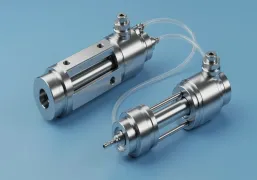
If you're sourcing gripping hardware, VS Enterprises supplies a solidly built Pneumatic Parallel Gripper meant for robotics, pick-and-place work, and general assembly-line duty. The body comes in aluminium alloy or stainless steel, built for both internal and external gripping, with stroke ranges that shift depending on the model. Being counted among the Parallel Gripper Manufacturers in Noida means the focus stays on one thing — no slipping, no misalignment, no surprises on the line.
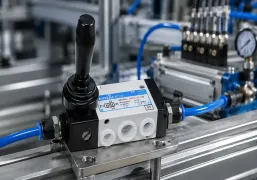
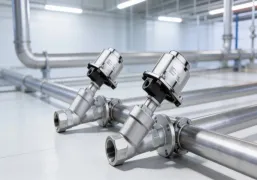
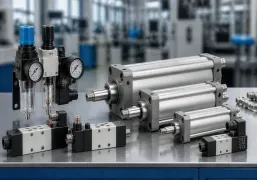
Pair that with other Industrial Automation Components — pneumatic cylinders, solenoid valves, that sort of thing — and you've basically got a full pneumatic circuit sorted without chasing five different vendors. It saves time, and honestly, it keeps compatibility issues off your plate too.
Benefits
Some of the benefits are
- Less manual handling, so operators aren't straining through repetitive motion
- Faster throughput on pick-and-place and packaging stations
- Handles delicate parts and heavy-duty ones, just adjust the force
- Fewer rejects, since parts stay centered while being transferred
- Slots into existing Pneumatic Automation Systems without tearing the setup apart
Applications & Use Cases
Doesn't matter which industry you're in, chances are a parallel gripper fits somewhere in the process. Here's a quick rundown of where it typically shows up:
- Automotive assembly — clamping, positioning small parts
- Electronics manufacturing — handling PCBs without cracking anything
- Packaging lines — pick, sort, place, repeat, fast
- CNC machine tending — loading and unloading workpieces
- Warehousing — sorting items moving along a conveyor
Did You Know: Swap manual placement for a well-matched parallel gripper, and cycle time drops noticeably, sometimes more than people expect.
Comparison Table: Gripper Types at a Glance
Understand various types of grippers with the table:
| Gripper Type |
Actuation |
Best Suited For |
Grip Style |
| Pneumatic Parallel Gripper |
Compressed air |
High-speed pick-and-place |
Two-jaw, self-centering |
| Electric Parallel Gripper |
Servo motor |
Variable part sizes, programmable force |
Two-jaw, adjustable |
| Angular Gripper |
Compressed air |
Larger, irregular parts |
Pivoting jaws |
| Three-Jaw Centric Gripper |
Compressed air |
Round or cylindrical parts |
Radial, self-centering |
Expert Tips & Buying Guide
Some of the expert tips are:
- Match stroke range to your actual parts, largest and smallest. Don't just grab something oversized because it seems safer
- Check the operating pressure lines up with what you already run
- Stainless steel for washdown or corrosive spots, aluminium everywhere else
- Ask about mounting adapters before you buy. A gripper that won't bolt straight onto your robot flange is going to cost you extra engineering hours later
- Go with someone established. Reliable Parallel Gripper Traders in Delhi and Noida will actually help you pick stroke and force numbers instead of leaving you guessing off a catalogue
Trivia: The term gripper in robotics goes back to early pick-and-place arms from decades ago, built for the simplest of loading jobs.
About VS Enterprises
Established in 2013, VS Enterprises (V.S. Pneumatics) is a leading Manufacturer, Dealer, Supplier, Trader, and Retailer of pneumatic products and industrial automation in India. They have a vast product list that includes pneumatic cylinders, solenoid valves, air regulators, PU tubing, actuators, foot pedals, one-touch fittings, automation accessories, and more. Their offerings include customized products designed for long lasting performance with optimum efficiency and a minimum downtime. They have successfully cater to clients in automotive, food processing, packaging, construction, and manufacturing sectors, thereby gaining a strong foothold in the market through quality, customer satisfaction and quick nationwide deliveries.
FAQs
1. What is a parallel gripper used for?
Ans: Picking up parts, holding them steady, then placing them exactly where they need to go — two jaws, straight line motion, nothing fancy. Robotic arms use it constantly, especially pick-and-place work. Small electronic bits, chunky industrial parts, doesn't matter. Assembly lines lean on it. Packaging floors too, honestly.
2. How is a parallel gripper different from other mechanical grippers?
Ans: Scissor-style grippers pivot open, and that can knock a part off-center pretty easily. Parallel ones don't do that. Both jaws slide evenly, same distance, same time — so whatever's caught between them just stays put, centered. Sounds minor. Isn't, though, not once you're running high-speed cycles all day. (49 words)
3. Is a pneumatic parallel gripper better than an electric one?
Ans: Depends, really. Pneumatic's faster, simpler, cheaper to run for repetitive tasks — that's usually the go-to. Electric gives you programmable force and stroke, which helps if your line juggles different part sizes. Most fast assembly and packaging setups still stick with air though. Less wiring, quicker cycles.
4. What materials are parallel grippers made from?
Ans: Aluminium alloy or stainless steel, mostly. Aluminium's fine, light-duty, general-purpose stuff, keeps things simple. Stainless steel earns its keep in washdown areas or wherever corrosion's a real risk. Get the body material wrong upfront, though, and you're looking at premature wear, extra maintenance, headaches nobody wanted.
5. Can a parallel gripper handle both small and large parts?
Ans: Within its stroke range, yes. Jaws move symmetrically, so one gripper adjusts across different part sizes — no separate fixture needed every time something changes. Just match stroke and force to your actual part, its size, its weight. Skip that step and slippage becomes a regular problem.
6. Where are parallel grippers commonly installed in a factory?
Ans: Pretty much anywhere precision handling matters — robotic arms, CNC machine tending, packaging stations, automotive assembly. Picking, sorting, placing, without banging up the part. That's the job description, basically. One of the more dependable pieces you'll find sitting inside a modern pneumatic automation setup.
Conclusion
Small part, sits right at the end of a robotic arm. But a Parallel Gripper carries more weight than its size lets on. Keeps parts centered. Protects the fragile ones. Turns up on assembly lines, packaging stations, CNC cells, anywhere handling actually has to be precise. Light Pneumatic Gripper for quick pick-and-place, or something heftier for tougher jobs, doesn't really matter which. Get the spec right early and you skip the rework, skip the unplanned stops too. Not flashy hardware, this Mechanical Gripper, but it does exactly what a factory floor needs, quietly, one cycle after another.
| Looking for reliable Parallel Grippers in Noida? Connect with VS Enterprises to find the right gripping solution for your automation line. |