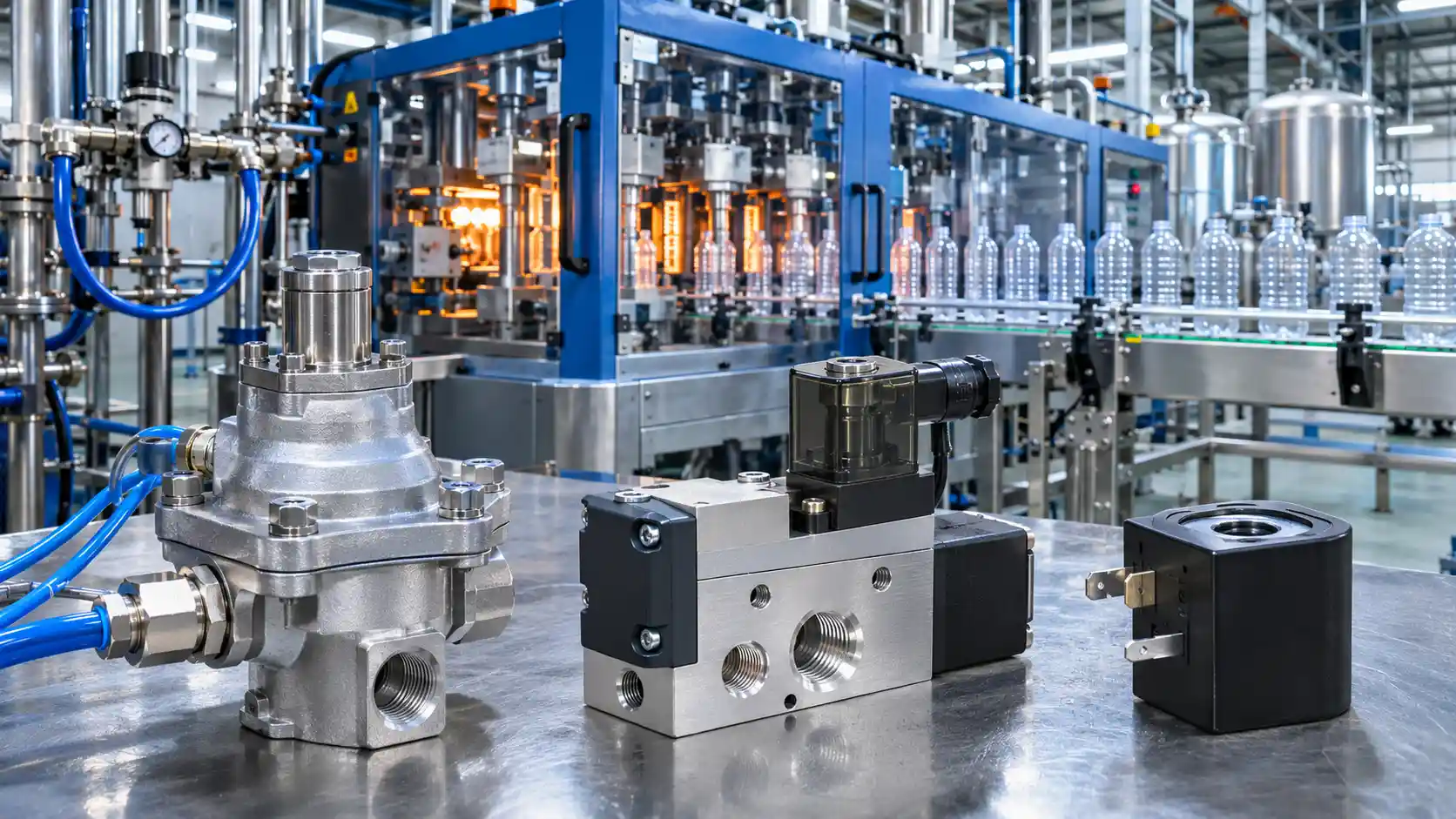
How valve timing, airflow and regular upkeep shape bottle output on your PET line
The PET bottle is converted from preforms into bottles within a matter of seconds, and each process requires precise air timings. The special valves are responsible for controlling the airflow. However, when a valve misbehaves, it creates a timing problem in the entire PET bottle moulding process. Learn more about this issue from the guide by V.S. Enterprises.
Cycle time is the time required by one round of the machine, starting from when the preform is loaded until the bottle is discharged. Special valves for PET moulding machines control airflow during the blowing and exhausting process and therefore impact PET cycle time directly.
Both processes operate under the same timing system:
Since the valves are placed between the compressor and the mold, any delay experienced affects all bottles individually. This is the reason why checking the valves could be more beneficial than searching the whole system.
DID YOU KNOW?: “The blowing step on many machines lasts only a second or two, so a small valve lag takes a big share.”
Seven technical points decide how steady your air timing stays.
The controller sends its signal in milliseconds, yet the valve must still move. That gap is valve response time, and fast switching solenoid valves push the next step late.
Warning signs include:
A valve passes only so much air. Raising pressure rarely fixes slow filling, so proper sizing for PET blow moulding air pressure matters more.
Here are some to check first:
The poppet valve works to open up the airflow by lifting the seat and is thus suitable for rapid flow. The Mercury poppet valve from V.S. Enterprises is an example of one of these valves.
The characteristics of a good poppet valve include the following:
The solenoid valve coil converts the electric pulse into motion. The weak coil will cause the electronic solenoid valve to fail to respond to an electric signal or to be delayed.
Electric issues:
Damaged seals allow air to pass through a sealed valve. Before pointing the finger at the valve, check your tubing, fittings and the compressor side.
Below is how you differentiate between the two:
Thousands of cycles per day harden the seals and allow dirt into the system. Respect the maintenance intervals for your particular model to preserve the special valve durability.
Wear occurs early:
Even when the valve is compatible with the mount, it may not fit the machine. Check the following before PET machine valve replacement.
These should include:
A slow cycle doesn't always point to the valve, so compare first and replace later.
This table helps narrow down the cause:
|
Possible Cause |
What You Notice |
Where to Look |
|
Valve response |
Late blowing, slow exhaust |
Valve and coil |
|
Air supply |
Low pressure at several points |
Compressor, filters, lines |
|
Machine sequencing |
Steps start out of order |
Controller settings |
|
Heating |
Preform not ready on time |
Oven zones |
|
Mould operation |
Slow opening, closing or stretching |
Mould and stretch rod movement |
|
Cooling |
Bottles stick or deform |
Mould cooling circuit |
TRIVIA: “PET stands for polyethylene terephthalate, the same plastic widely used for water and soft drink bottles.”
Depressurise the equipment before touching any valves. PET moulding valve troubleshooting should be based on information and not conjectures.
Use this approach:
If the signal timing is correct but the valve triggers late, the valve or its coil is likely faulty. In case the valve operates on time but the filling process remains slow, check the air supply.
Get this information to ensure the special valves suppliers can give you a correct quote on the part.
Always have this list ready:
A picture of the existing valve's nameplate helps a lot.
These special valve selection mistakes waste time and money for the plants.
Do not make the following mistakes:
“Compressed air is an expensive utility in manufacturing plants; therefore, having a leaking valve means wasting money and time.”
FACT: “Compressed air is a costly utility in factories, so a leaking valve wastes money and time.”
V.S. Enterprises is one of the special valve manufacturers in Noida, providing mercury poppet valves, solenoid valve coils & electronic solenoid valves for PET moulding machines. The customers are assisted in selecting valves that suit their machine rather than guessing through the catalogue images.
This product line includes:
For a quick query, provide:
Clear brief enables quick identification and recommendation of a suitable product.
Speed of response, adequate air flow, stable pressure, and correct valve selection help to prevent special valves from hampering production rates. Start with a diagnosis, then follow it up with specification matching. Think about the valves as an integral component of an overall system in which air flow, electrical condition, and maintenance will dictate the stability of your cycle. Look into the PET bottle blowing valves line offered by V.S. Enterprises.
Special valves control the supply timing of compressed air in the process of blowing and exhausting. Inefficient operation of the valves and inadequate air flow may result in an increased cycle time of molding and reduce the output of bottles.
The possible symptoms of such a problem include late blowing, uneven air pressure, leaking air, slow exhaust, and poor-quality bottles. Unusual sounds can be another symptom of the problem.
This poppet valve from Mercury controls the flow of compressed air during the blowing process. Its function of opening and closing contributes to the required timing of airflow during the production of bottles.
The frequency of checking special valves in PET machines should be done according to the machine manufacturer’s guide and the operating conditions of the machine.
Possible reasons for an unstable airflow include leaks in the valve seal, clogged filters, damaged pipes, and unstable pressure of the compressor. The inspection of the whole air supply system will aid in identifying the true problem.
When buying a new special valve, buyers need to be sure about its model, pressure and flow, port size, coil voltage, connections and machine compatibility. If you share the existing valve's nameplate information with the supplier, it will help to choose the right part.