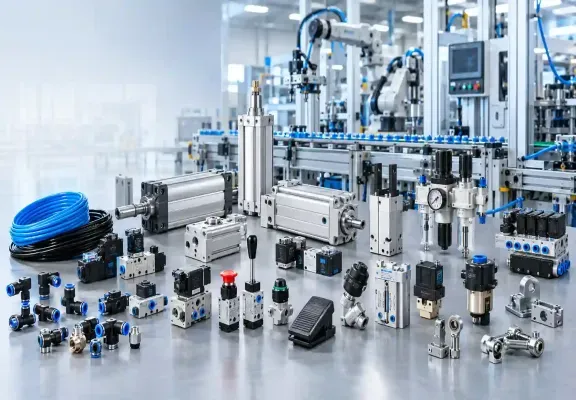
When people close eyes and imagine big industries, they see huge machineries, large tools, and loud assembly lines. That’s fair the big stuff grabs attention. But what keeps it all running smoothly? It’s often the smallest parts doing the hardest work behind the scenes.
One of those quiet heroes? Pneumatic valves.
These little components might be easy to overlook, but they control everything from airflow to automation. They decide when machines move, stop, or change direction. Without them, even the most advanced factories can come to a halt.
Valves aren’t just parts. They’re what keep operations safe, efficient, and running like clockwork. Whether it’s a packaging line, an automotive plant, or a food processing unit good valves mean fewer breakdowns and smoother production.
We’ve seen the difference up close. As leading pneumatic valves manufacturers and trusted Pneumatics Dealers in Delhi, we’ve helped countless businesses get their setups right and seen how much time, money, and stress the right components can save.
Therefore, the next time you enter a factory, do not just admire those huge machines. It is the little important parts such as valves that make the entire show run.
It’s easy to miss the small stuff when you walk through a factory. The big machines grab all the attention. But it’s often the tiniest parts that actually keep everything running.
Pneumatic valves are one of those small but seriously important parts.
They control how air moves inside your machines. When it starts, when it stops, how much pressure flows — all that depends on these valves. Without them? Things slow down. Or worse, stop completely.
In factories, workshops, packaging units — these valves quietly do their job in the background. But they’re the reason your machines run smooth and safe. They keep automation on track. They help your tools work precisely. They even help save energy by cutting down air wastage.
We’ve seen it ourselves. Businesses across Delhi and Noida count on reliable setups. And a big part of that is getting the right valves from experienced pneumatics valves dealers in Noida. It makes all the difference between constant breakdowns and stress-free operations.
So yeah, valves may be small. But they decide how well your factory runs. Choose the right ones, and your whole system breathes easy.
Pneumatic systems always perform at the back stage as lead roles to keep factories, workshops and machines moving. Is it possible without proper valves? That airflow has no control.
Valves guide the air — where it goes, how fast it moves, and how much pressure builds. Different jobs need different valves. Let’s break it down simply.
Are you selecting your valves in a pneumatic system? You do not want to rush into it. These are minute components that may not attract your attention but these govern the smooth functioning of your machines. Pick the wrong ones — and you could be looking at downtime, repairs, and frustration.
Let’s make it simple. Here’s what you should always check before buying.
There’s no need to guess. Experienced pneumatics valves dealers in Noida or trusted pneumatic valves manufacturers know what works for your industry. They’ll help you choose valves that match your machines, environment, and budget.
Don’t save money by cutting corners on valve quality. A good valve might cost a little more now but it’ll save you from downtime, repairs, and headaches later.
The right valve? It keeps your machines moving and your business stress-free.
In factories, it’s always the small things that quietly keep the big machines running. Pneumatic valves are the perfect example.
They may not look like much, but they control everything — from airflow to pressure to safety. The right valves keep your machines running smooth. The wrong ones? They slow things down, cause breakdowns, and hit your bottom line.
That’s why understanding the different valve types — and knowing where and how to use them — isn’t just for engineers. It’s for every business that wants efficiency, safety, and reliable operations.
If you’re planning to upgrade your factory or you just want expert advice, don’t leave it to chance. Talk to trusted Pneumatics Dealers in Delhi or reliable pneumatics valves dealers in Noida. They’ll help you choose the right valves for your setup — saving you time, money, and unnecessary stress.
Small components. Big difference. That’s how industries stay efficient and productive.